
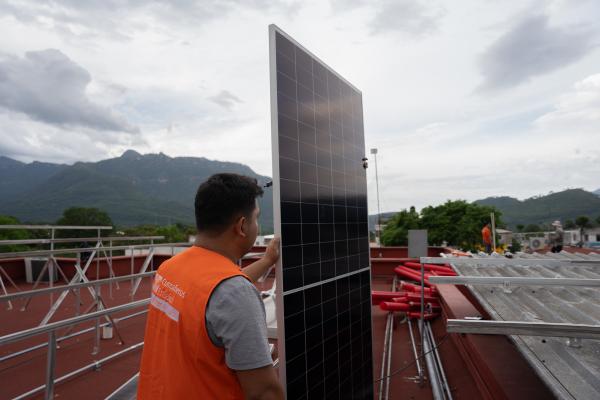
Geographic, climatic, and infrastructure conditions constantly put the response capacity of the health centers and hospitals we collaborate with to the test.
With a commitment to contributing to social justice, sustainability, and community well-being, at Compañeros En Salud (CES) we are taking a step toward climate and energy resilience by implementing solar energy projects in the health units of Jaltenango and Siltepec.
This project not only represents a commitment to clean energies in the face of the global climate crisis, but also a direct and vital solution to protect the continuity of health services and the well-being of hundreds of patients.
The Challenges of Electricity Supply in Health Units
For years, the electricity supply in the region has experienced constant fluctuations and prolonged outages. In areas of the Sierra Madre and Frailesca, a power outage doesn’t last just a few minutes; it can extend for hours, entire days, or complete weeks due to weather factors, fallen trees, or community blockages.
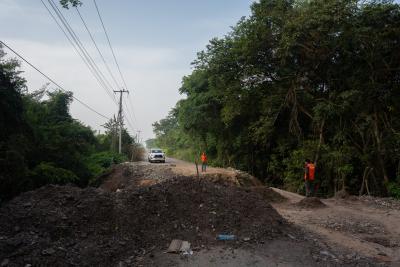
Tramo afectado por las lluvias de la carretera Jaltenango-Tuxtla
Until recently, emergency plans depended on fuel generators. However, this system had operational and economic limitations:
Fuel Shortages: In remote places like Siltepec, resupplying fuel involved traveling to other municipalities, risking the hospital’s operability.
Areas Without Lighting: During power outages, key spaces such as the Maternal Houses (Casas Maternas) and other care areas could be left without electricity, forcing staff to look for alternatives to continue their activities or, in some cases, suspend services at nightfall.
Risks to the Cold Chain: Prolonged interruptions threatened the preservation of vaccines, insulin, and other medications requiring specific storage conditions. Faced with these situations, health personnel had to emergency-transfer supplies to other units located between 30 minutes and more than two hours away.
Solar Systems Adapted to the Needs of Each Unit
To address these needs, at CES we promoted the installation of photovoltaic systems (which convert solar energy into electricity), considering the geographic and climatic conditions of each health unit. Based on an analysis of each site’s energy consumption, the characteristics and capacity of the systems were defined, organized into three main installations:
Jaltenango Hospital and Maternal House (unified system):
120 monocrystalline solar panels of 650 W.
12 lithium batteries of 16 kWh each (a total of 192 kWh capacity).
9 inverters of 10 kWh.
For the first time, the Hospital and the Maternal House have a unified energy system. Its capacity exceeds that of the emergency generator by almost 50%, allowing for backup during power supply interruptions and consideration of future expansions.
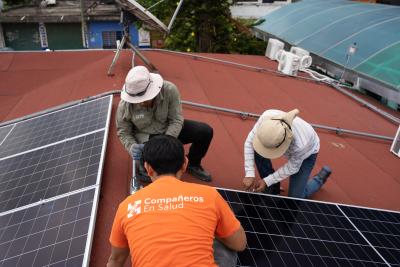
Instalación de paneles solares en el Hospital Básico Comunitario Ángel Albino Corzo
Siltepec Center for Health with Hospitalization:
72 monocrystalline solar panels of 650 W.
8 lithium batteries of 16 kWh (128 kWh total capacity).
6 inverters of 10 kWh.
A robust system designed to overcome the zone’s constant outages and ensure uninterrupted operability.
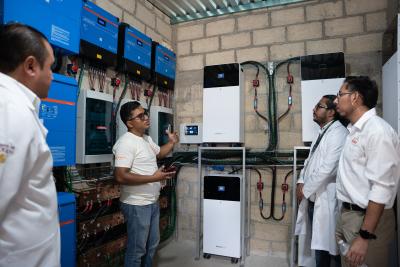
Centro de carga del sistema de paneles solares en el Centro de Salud con Hospitalización Siltepec
Jaltenango Health Center (cold chain backup):
A specialized backup system was installed in this unit to keep pharmacy and vaccination refrigerators running, as well as the lighting and climate control of these areas. Furthermore, it features interconnection with the Federal Electricity Commission (CFE) grid, allowing surplus solar energy to be injected back and reducing electricity consumption from the grid.
The systems harness the solar radiation available in the region. Even on cloudy days, the panels can generate between 70% and 80% of their maximum capacity, allowing energy supply to the units and battery recharging to continue.
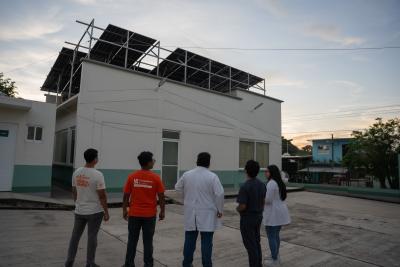
Sistemas de paneles solares en Centro de Salud Jaltenango
Service Continuity, Savings, and Cold Chain Protection
Although the project is recent, its installation already represents positive changes in the daily operation of the health units:
Automatic Power Supply Transition: The switch between the CFE grid and the solar system occurs in milliseconds. This allows medical equipment to continue operating without noticeable interruptions, favoring continuous care 24 hours a day.
Reduction in Fuel Consumption: By considerably lowering the need to use diesel generators, operating costs and the tasks staff had to perform to manage fuel supply during emergencies are also reduced.
Contribution to Climate Action: The use of solar energy helps reduce fossil fuel consumption and the emissions associated with their use, incorporating more sustainable energy alternatives into the operation of health units.
A Long-Term Project
A project of this magnitude is designed to last. The installed lithium batteries have an estimated lifespan of 15 years or more, and the systems feature components selected for their quality and durability.
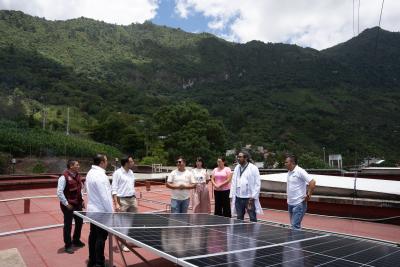
Equipos CES e IMSS Bienestar en el Centro de Salud con Hospitalización Siltepec
Likewise, CES has worked on training local personnel so they can supervise equipment operation. This includes preventive maintenance tasks, such as semiannual panel cleaning and periodic checks of the spaces where the batteries are located. These actions help keep the facilities in good condition and favor their long-term operation.
A Shared Effort
Strengthening energy infrastructure is also a way to look after the continuity of care. Now, health units have better conditions to respond to power supply interruptions and maintain essential services for people in the region.
In the words of Mauricio Arroyo, Infrastructure and Maintenance Coordinator at CES:
In health, we cannot skimp; a power outage can mean putting a life at risk on the way to another center.
This achievement was made possible thanks to the valuable support and funding from Direct Relief and MACP, whose trust and commitment to sustainable solutions allowed for the incorporation of energy autonomy in the Sierra Madre and Frailesca of Chiapas.
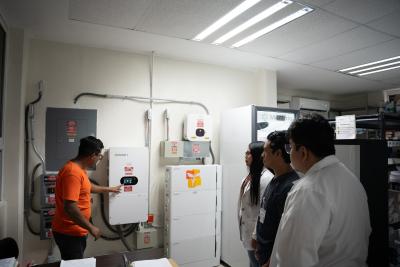
Equipos CES e IMSS Bienestar en el Centro de Salud Jaltenango
Thank you for believing in a model of health that is dignified, resilient, and respectful of our planet.
Continue supporting the projects of Compañeros En Salud